



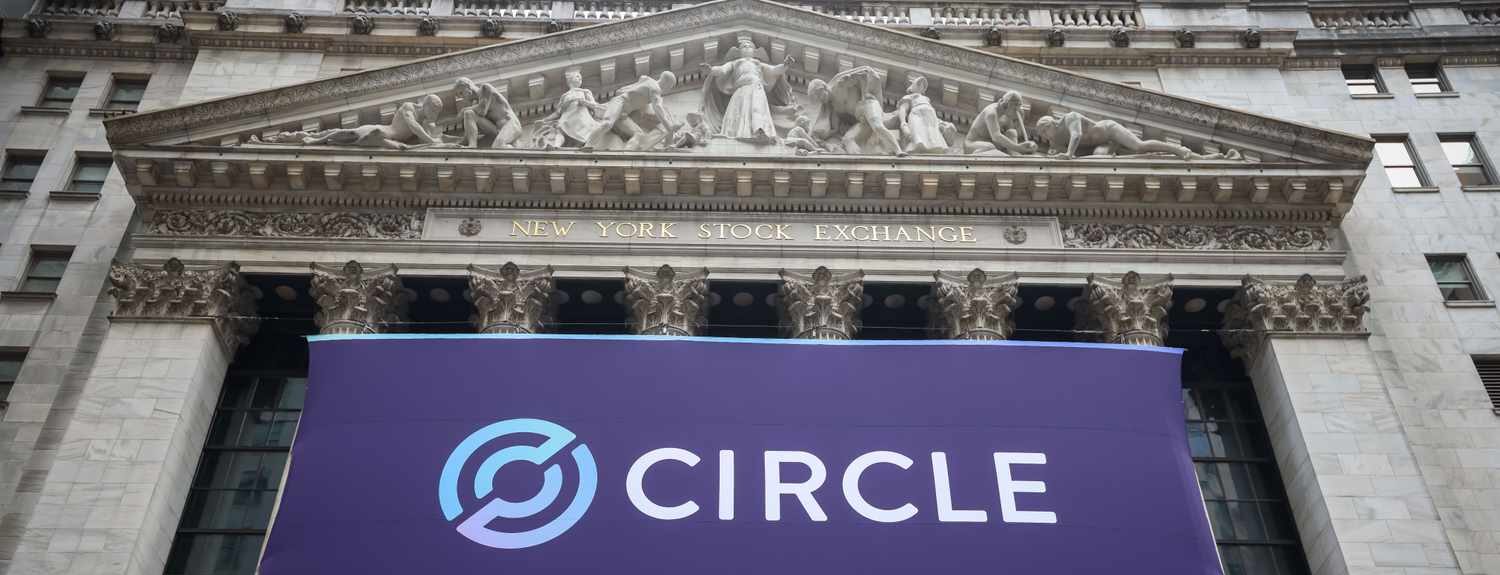
Circle, the company behind the USDC stablecoin, said its Arc blockchain mainnet is scheduled to launch Sept. 16, a move that would give the company its own financial infrastructure for payments, capital markets and tokenized assets.
The launch marks Circle’s attempt to move beyond simply issuing digital dollars and toward owning a larger share of the infrastructure through which those dollars and other tokenized assets move. Circle has announced partnerships tied to Arc with major financial institutions, including BlackRock and the Depository Trust & Clearing Corporation, giving the network potential connections to some of the largest pools of traditional financial assets.
Arc is a layer-1 blockchain built specifically for financial applications such as payments, foreign exchange, treasury management, lending, capital markets and tokenized real-world assets, according to Circle. Unlike general-purpose blockchains such as Ethereum and Solana, Arc allows USDC to be used as the network’s gas token, meaning businesses can pay transaction costs in dollars rather than holding a separate, potentially volatile cryptocurrency. Circle says the network can provide settlement finality in under one second and includes optional privacy features intended to protect sensitive financial information while preserving the auditability regulated institutions require. The network is also compatible with the Ethereum Virtual Machine, allowing developers to migrate existing applications with relatively few changes.
Circle currently depends on other blockchains, including Ethereum, Solana and Polygon, to distribute and transact USDC — networks the company doesn’t control. Arc would give Circle direct control over transaction costs and underlying infrastructure if banks, asset managers, payment companies and developers adopt it.
Circle said more than 100 companies participated in Arc’s testnet, representing organizations that collectively manage hundreds of trillions of dollars in assets. During the testnet’s first 90 days, the network processed more than 150 million transactions, attracted nearly 1.5 million transacting wallets and averaged settlement times of about half a second, according to the company. Whether that testnet activity converts into institutional adoption once Arc goes live remains an open question.
The launch follows Circle’s second-quarter earnings report, which showed continued growth in its core stablecoin business. The company reported $701 million in total revenue and reserve income, up 7% from a year earlier. USDC circulation rose 19% year over year to $73.3 billion, and onchain transaction volume nearly tripled to $14.8 trillion. Circle reported earnings of 18 cents per share, ahead of Wall Street’s consensus estimate of 16 cents and marking its fourth consecutive quarterly earnings beat. The company’s revenue-less-distribution-costs margin rose to 41%, and management raised its full-year 2026 margin outlook to between 41.7% and 43.7%, up from a prior forecast of 38% to 40%.
Circle’s business has traditionally centered on issuing USDC and investing the dollars backing those tokens in highly liquid assets to generate reserve income. Arc would expand that model by positioning Circle to operate infrastructure rather than simply supply currency for transactions on other companies’ networks — an opportunity that could grow if stocks, bonds, money-market funds, Treasury securities and other assets continue moving onto blockchains.
Competition is expected to be intense. Ethereum and Solana already have large developer ecosystems, and other companies are building competing stablecoin and blockchain infrastructure. Circle will need to persuade financial institutions and developers that Arc offers enough advantages to justify adopting another network, and the September launch will provide an early test.
Circle has a market capitalization of approximately $15.7 billion. Its shares are down about 14% in 2026 but have roughly doubled since the company’s June 2025 initial public offering. Analysts give the stock a consensus “moderate buy” rating, with an average price target of approximately $101.70.