



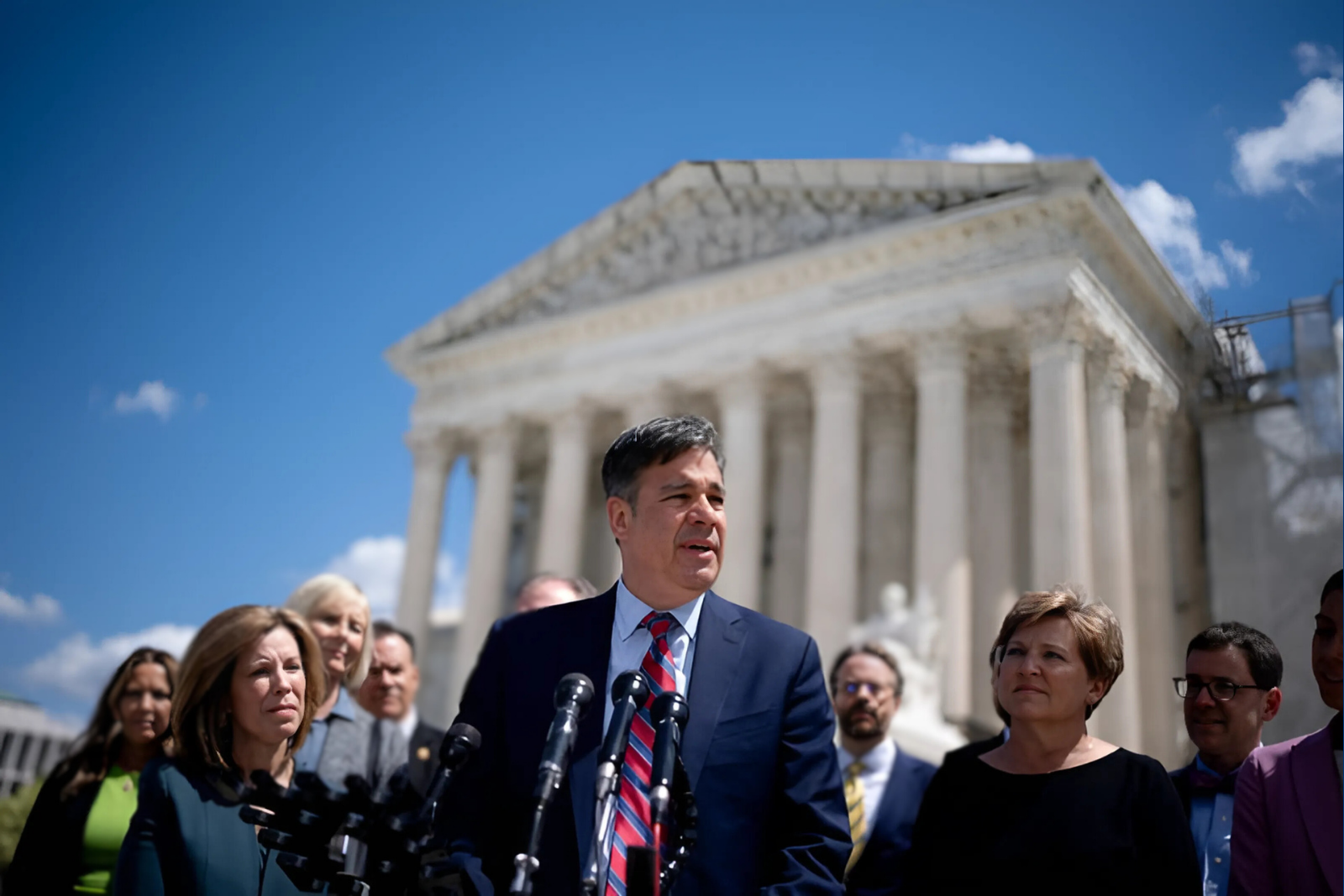
Idaho Attorney General Raúl Labrador filed a notice of appeal with the Ninth Circuit Court of Appeals and an emergency motion seeking a stay of a federal district court ruling that he says improperly overrides Idaho’s Defense of Life Act and invents a new constitutional right to abortion.
U.S. District Judge B. Lynn Winmill ruled last week that parts of Idaho’s Defense of Life Act are unconstitutional, finding the law impermissibly bars abortions when a physician determines continuing a pregnancy poses a non-negligible risk of serious and lasting harm to the mother’s health — including cases where the patient’s mental health puts her at risk of suicide or self-harm. In his opinion, Winmill wrote that it was an affront to human dignity to deny life-saving care based on whether a health threat is physical or psychiatric.
Labrador characterized the ruling as a direct defiance of the U.S. Supreme Court’s 2022 Dobbs decision.
“A federal judge has replaced Idaho’s law with his own abortion standard, broad enough to treat even the ordinary risks of a C-section as justification for an abortion,” Labrador said. “Dobbs made clear that abortion policy belongs to the people and their elected state representatives, not the judiciary. We have appealed to the Ninth Circuit, and we will fight until this ruling is reversed and Idaho’s law is restored.”
The case was brought by Dr. Stacy Seyb, a maternal-fetal medicine specialist at St. Luke’s Health System in Boise, who argued that Idaho’s restrictions prevented him from providing medically necessary care. During the trial, Seyb acknowledged under oath that he had never read the Idaho Supreme Court’s 2023 decision clarifying the state’s abortion law, had not received training on the Defense of Life Act and was uncertain what procedures the law permitted. That uncertainty, Labrador has argued, led Seyb to transfer patients to Utah for care that Idaho law already allowed him to provide in state.
Idaho’s Defense of Life Act, which took effect following the Dobbs ruling, prohibits most abortions with exceptions for rape and incest — if a police report is produced — and when a physician determines in good faith that an abortion is necessary to prevent the mother’s death, without requiring that death be imminent or certain. The Idaho Supreme Court clarified that standard in 2023.
Labrador’s emergency motion argues the district court’s ruling conflicts with Dobbs and also improperly functions as a statewide injunction blocking enforcement against all Idaho physicians, not just Seyb, in violation of the Supreme Court’s 2025 ruling in Trump v. CASA, which held that federal courts lack authority to issue universal injunctions extending beyond the parties in a case.
Since Dobbs, Idaho’s pregnancy-related mortality rate has fallen from 18.7 deaths per 100,000 live births in 2018 to 4.29 in 2024, according to Labrador’s office, well below the national average.